











How coworking spaces can help tackle the employee loneliness epidemic
For years, remote work’s been positioned as an obvious win. It’s easier to protect your time, cut commuting, and shape your day around real life rather than the other way round. For many people, that promise still holds.
But a growing body of research suggests there’s a quieter cost to fully remote work that organisations can’t afford to overlook: employee loneliness.
Loneliness is no longer being framed as a purely personal issue or an unfortunate side effect of modern life. It’s increasingly recognised as a workplace challenge, with direct consequences for mental health, productivity, engagement and retention.
Recent Bupa-backed research, widely covered by the UK press, has brought this into sharper focus for younger workers. Reporting on the findings, The Independent noted that around four in ten 16–24-year-olds said they feel lonely or isolated because of their work circumstances, with remote working often part of that picture. The same set of findings was also covered by The Times.
This isn’t a rejection of flexibility. Rather, it’s a signal that work, for many people, is still a social experience. And when that social layer disappears entirely, something important goes missing.
For companies managing remote teams, that raises a difficult but necessary question.
How do you preserve autonomy and flexibility without leaving people disconnected, disengaged or quietly struggling?
For a growing number of organisations, coworking memberships are emerging as a practical, scalable answer.

Employee loneliness is now a workplace issue
Loneliness at work used to be discussed in fairly abstract terms, often bundled into wider wellbeing conversations without much structure or ownership. That’s changing, partly because the data is becoming harder to ignore.
The Office for National Statistics has reported that younger adults consistently report higher levels of loneliness than older age groups, based on its public opinions and social trends research.
That matters because loneliness doesn’t always show up as something obviously “wrong”. More often, it shows up as:
- quieter participation in meetings
- fewer informal conversations and weaker peer relationships
- slower learning and less confidence in decision-making
- a steady dip in motivation that’s hard to trace to one moment
By the time performance or retention starts to suffer, the damage has often already been done.
Why working from home isn’t right for everyone
Remote work itself isn’t the problem. The assumption that it works equally well for everyone is.
Some employees thrive at home. Others struggle with blurred boundaries, limited social interaction or a lack of routine. And for people early in their careers, the loss of ambient learning can be huge because they’re missing socialising and they’re missing exposure to how work gets done.
We’ve explored that side of the equation in more depth in an article on the emerging disadvantages of remote working for employees, including the ways isolation, home distractions and weaker collaboration can quietly build up over time.
We’re seeing the conversation shifting from remote versus office to how companies can give people options that support both performance and wellbeing.
The social value of work was never accidental
Work has always played a social role, even when that wasn’t its stated purpose.
Shared environments create low-pressure interaction. You pick up how problems are solved, build trust without scheduling it, and feel part of something bigger than your own task list. When people work entirely alone for long periods, that background layer of connection disappears.
And the consequences goy beyond emotional. The World Health Organization has been clear that social isolation and loneliness have serious impacts on physical and mental health, including wellbeing and longevity. The WHO has also highlighted the wider health risks and the urgency of social connection as a public health priority.
In the workplace, that often translates into disengagement, presenteeism and higher turnover.

Why coworking memberships are becoming a common employee benefit
Rather than forcing a full return to the office, many companies are taking a more nuanced approach and offering coworking access as an opt-in benefit.
This recognises that flexibility and connection don’t need to be opposing forces.
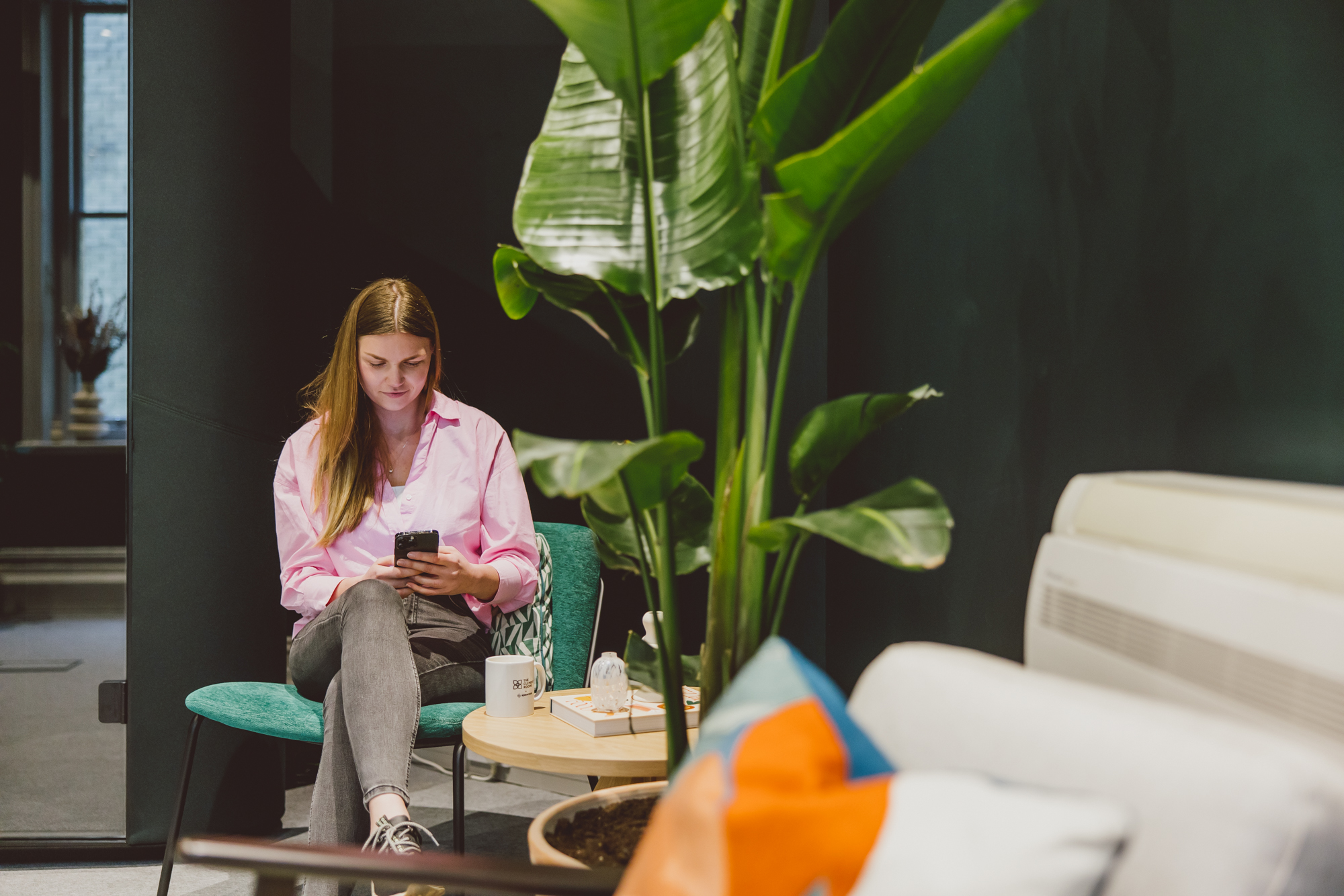
Coworking memberships allow employees to work around others without being tied to a single HQ. They can choose when and how often they use a space based on their working style, their home setup, and what they need that week.
For employers, this approach solves several challenges at once:
- It supports wellbeing without intrusive monitoring
- It provides a professional work environment for those who struggle at home
- It creates opportunities for organic social interaction without mandating attendance
It also scales more effectively than maintaining underused offices or relying on occasional offsites to create connection.
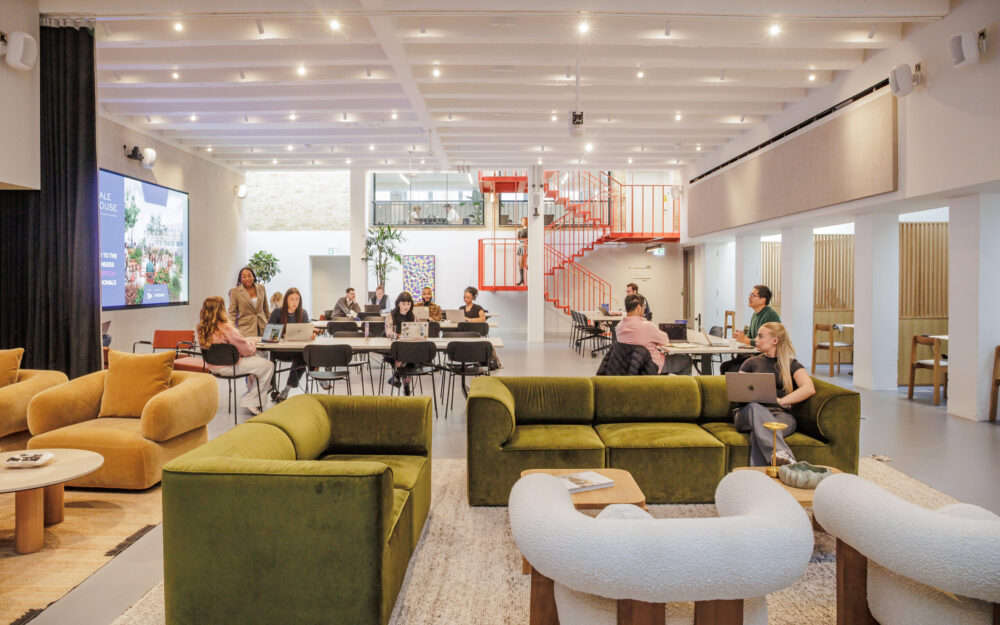
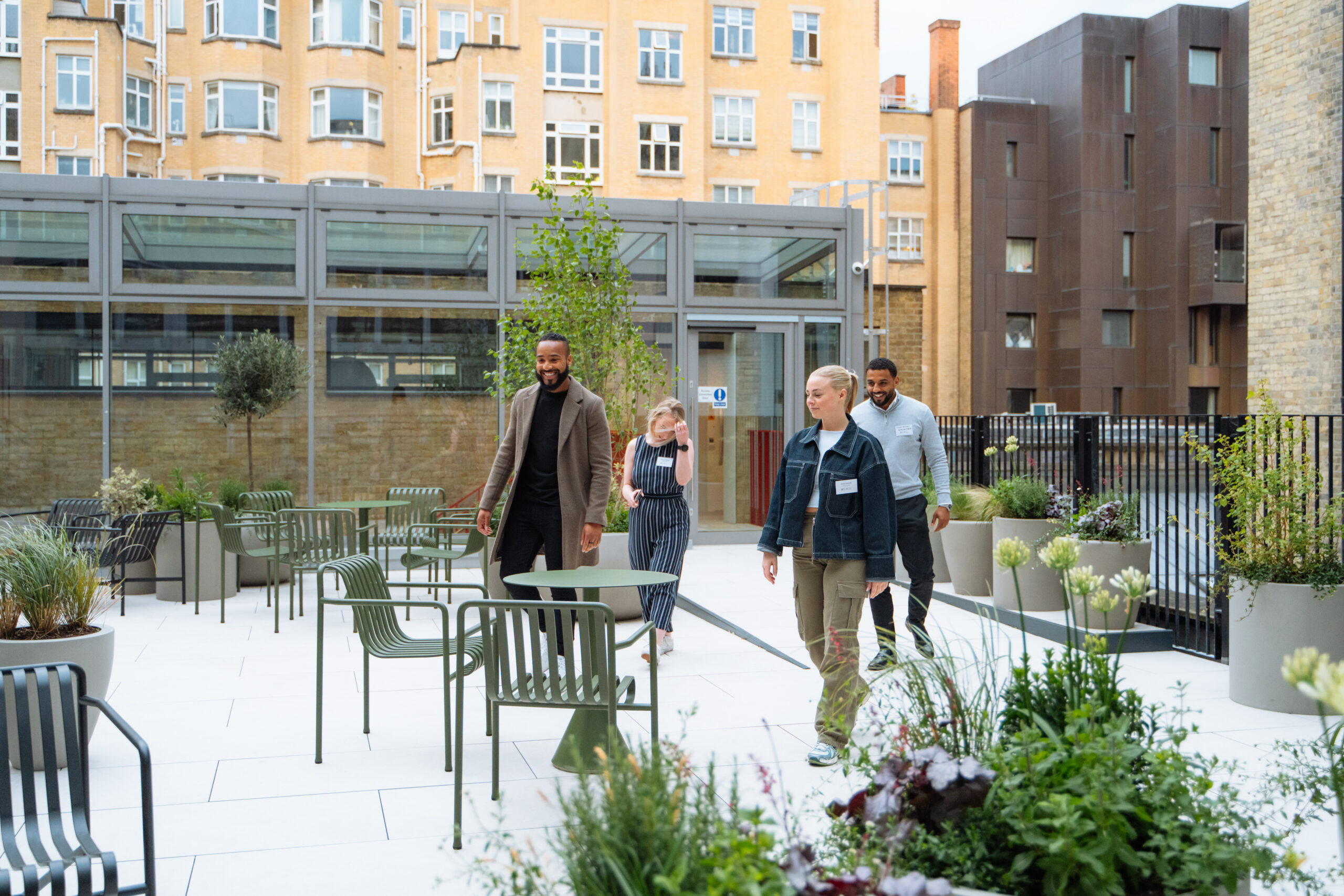
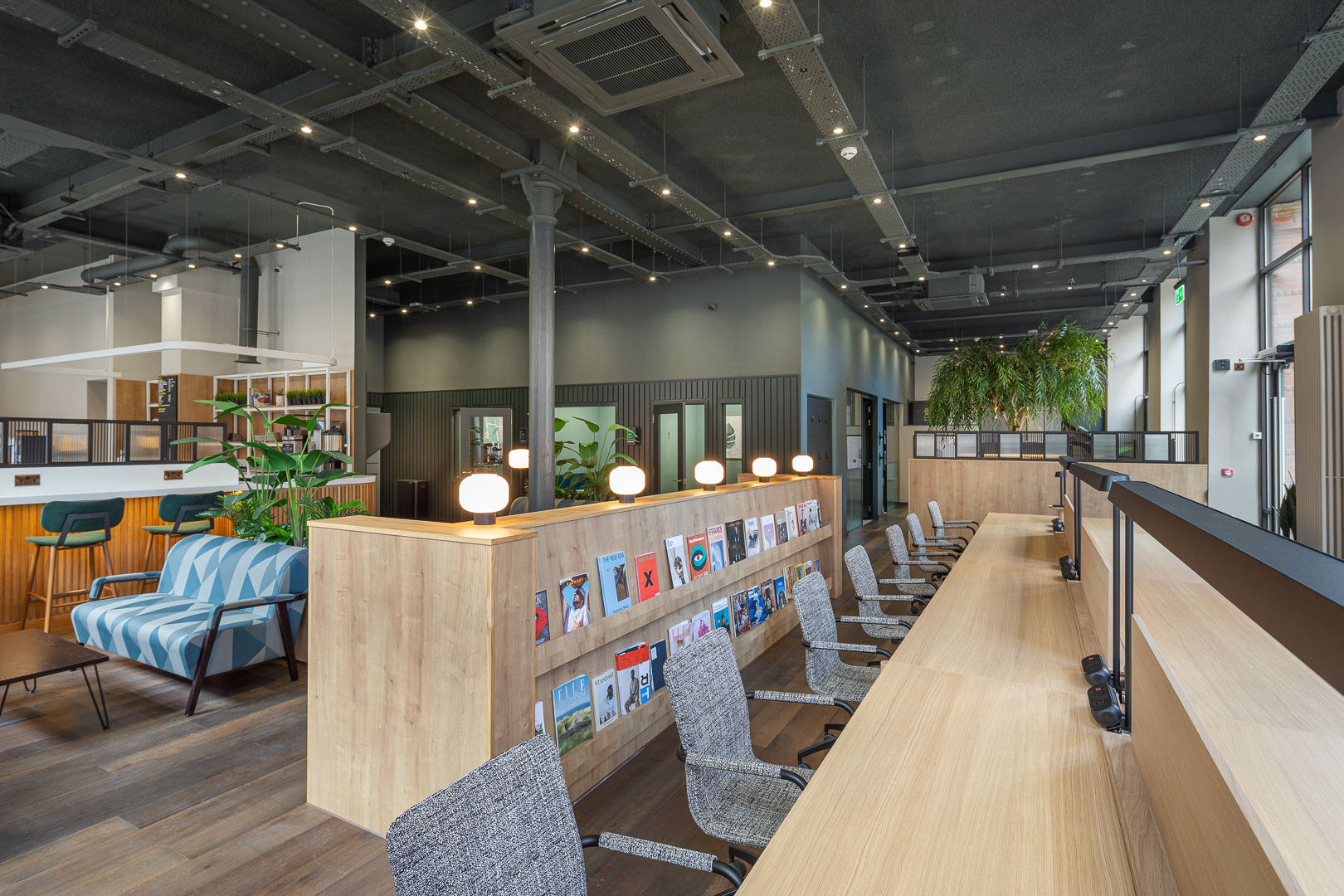
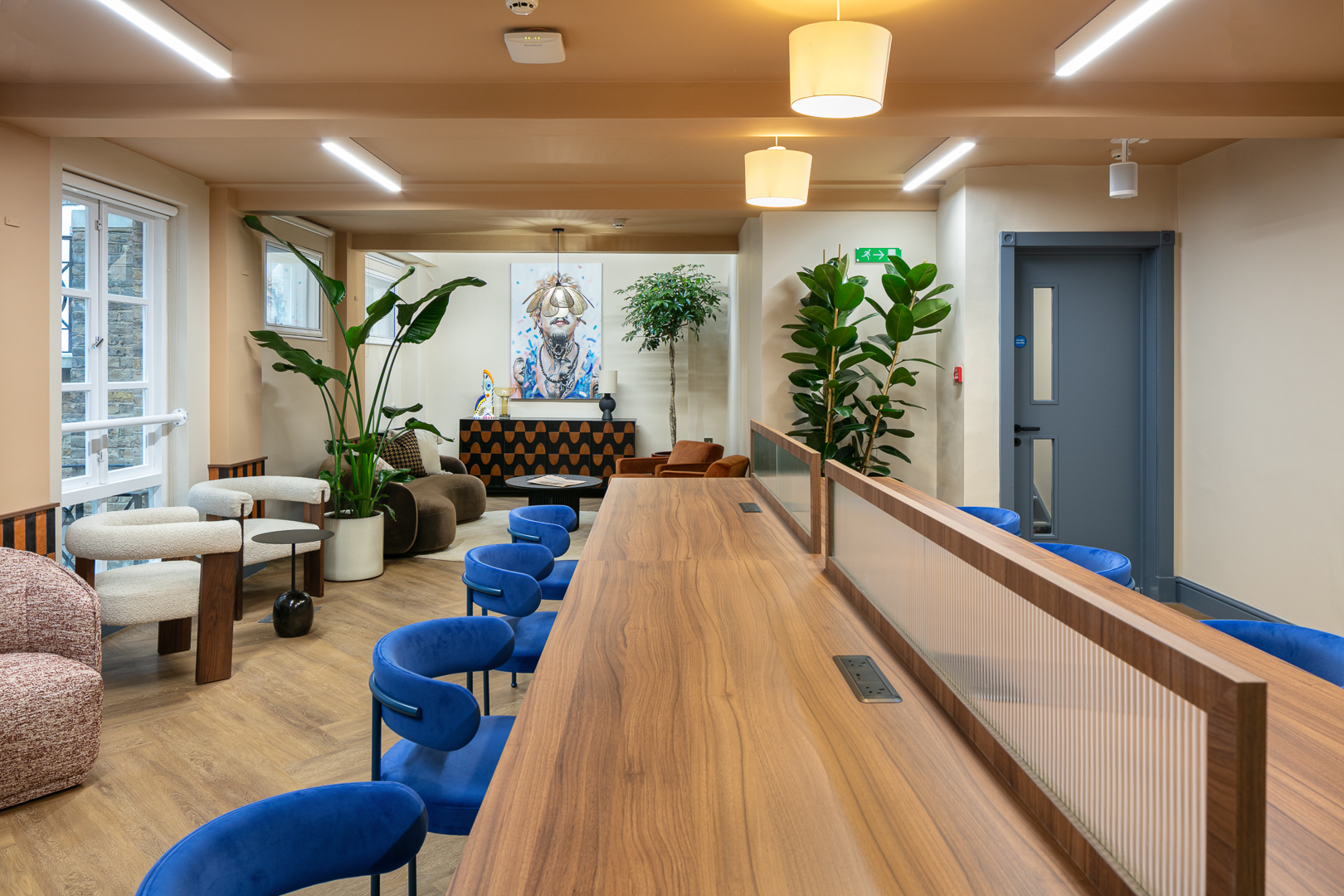
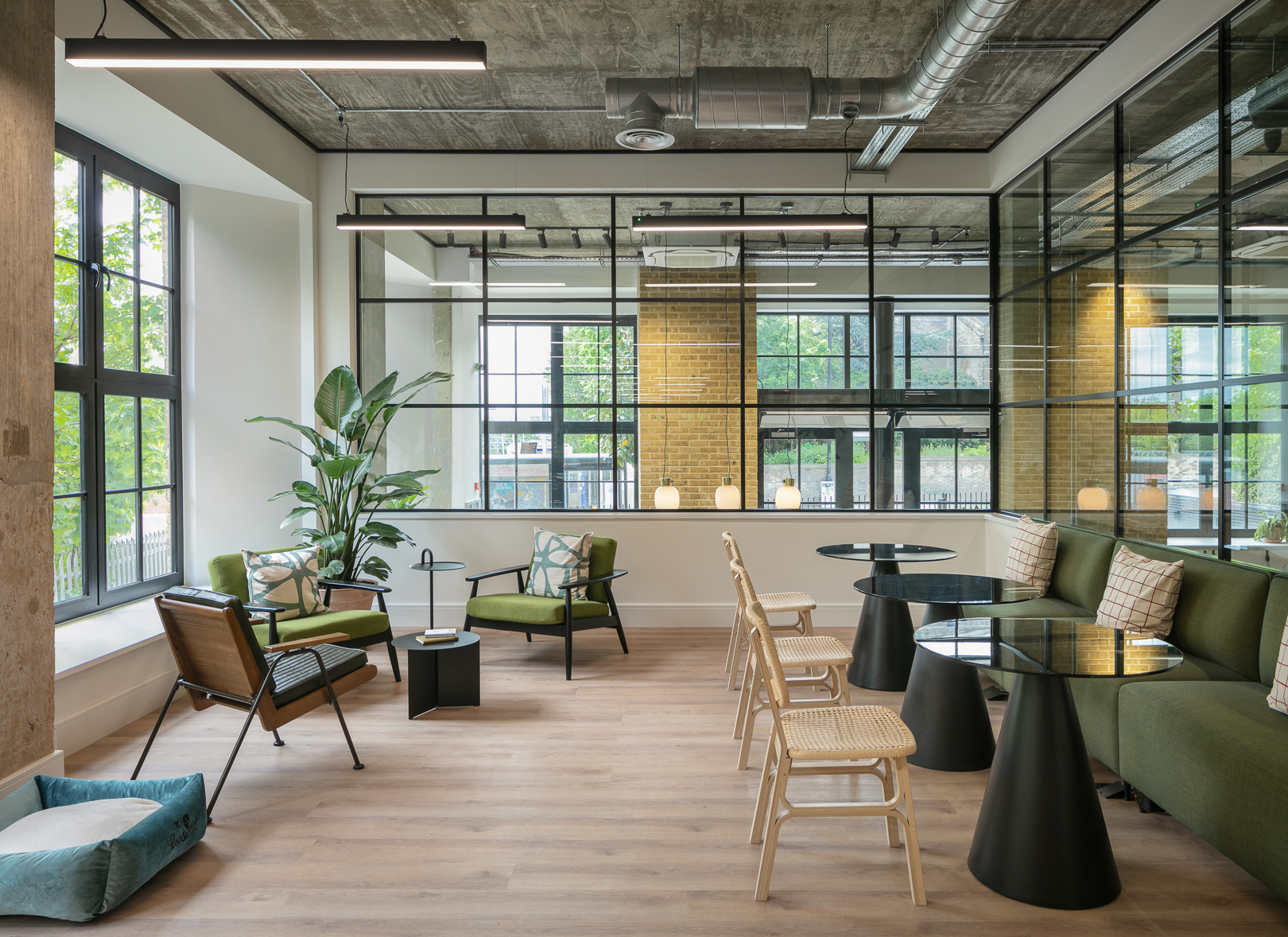
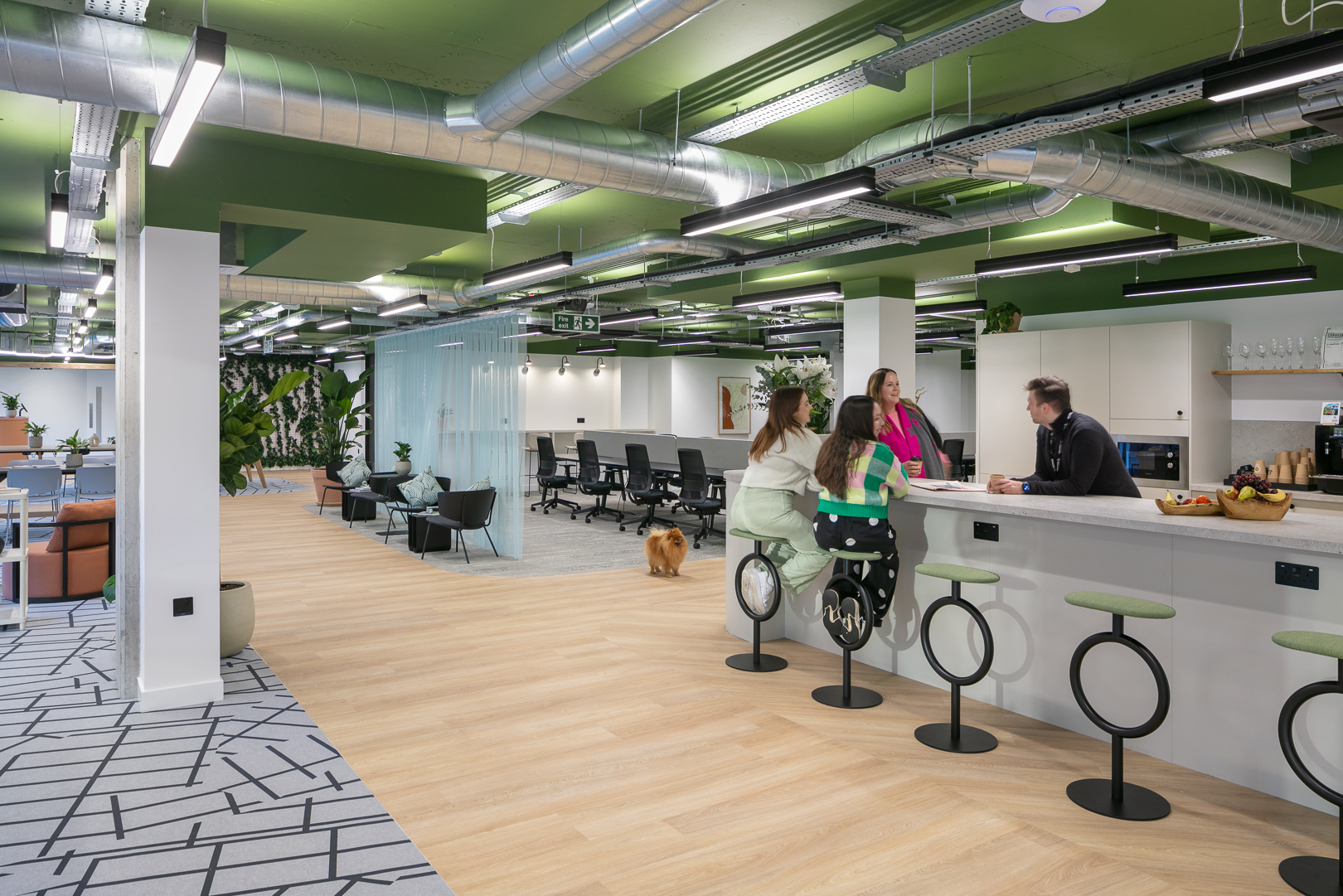
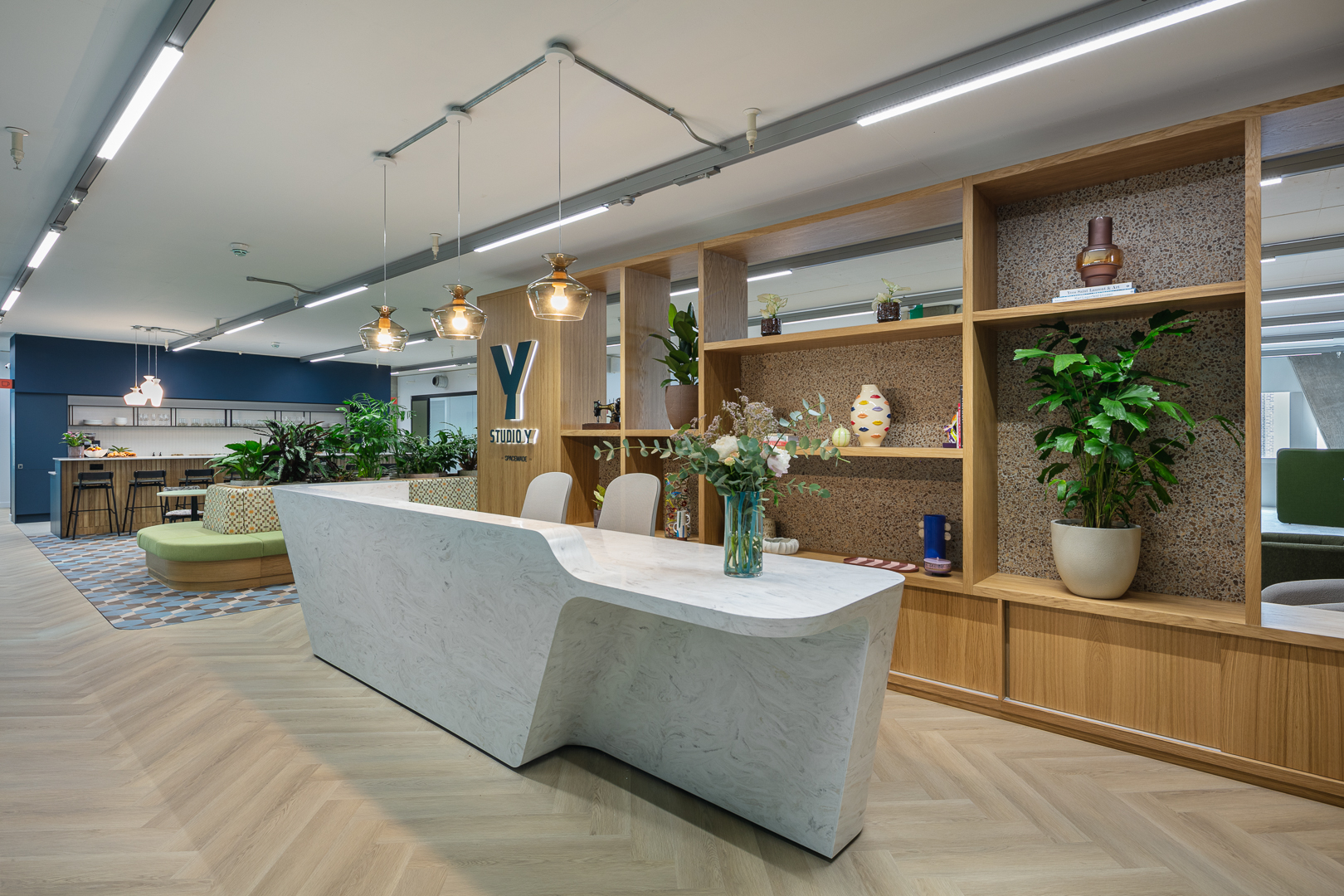
There are so many benefits of coworking. At Spacemade, our spaces are hospitality-led environments that support focus while making human connection feel natural rather than forced. The aim is to bring the benefits of in-person work, without the pressure of a full-on office environment where everyone is working for the same company.
1. Reducing loneliness without forcing social performance
One reason coworking works so well as a response to employee loneliness is that it doesn’t demand constant interaction.
People aren’t required to network, make small talk, or perform “culture”. They simply work alongside others.
That distinction matters because belonging is a fundamental human need, and when people don’t feel it, commitment and engagement can drop.
Coworking creates a lower-pressure version of “being around people” that many remote workers miss, without pushing them into a full return-to-office routine they don’t want.
2. Productivity and connection don’t have to compete
There’s still a lingering assumption that shared workspaces reduce focus. In reality, that tends to happen only when spaces aren’t designed around how people actually work.
Research consistently shows that access to different types of work settings improves performance rather than undermining it. Gensler’s Global Workplace Survey 2025 found that employees in high-performing workplaces are nearly three times more likely to stay with their employer and report higher levels of effectiveness when their environment supports both focused work and collaboration.
Wider workplace data also points to the same pattern. Employees are more productive and engaged when their environment actively supports how they work, rather than forcing every task into the same setting. Studies into workplace experience show that workplaces offering greater choice and variety see higher levels of satisfaction and a much larger proportion of employees classed as “thriving”, particularly when people can move between different types of space depending on the task at hand and aren’t confined to a single desk or environment
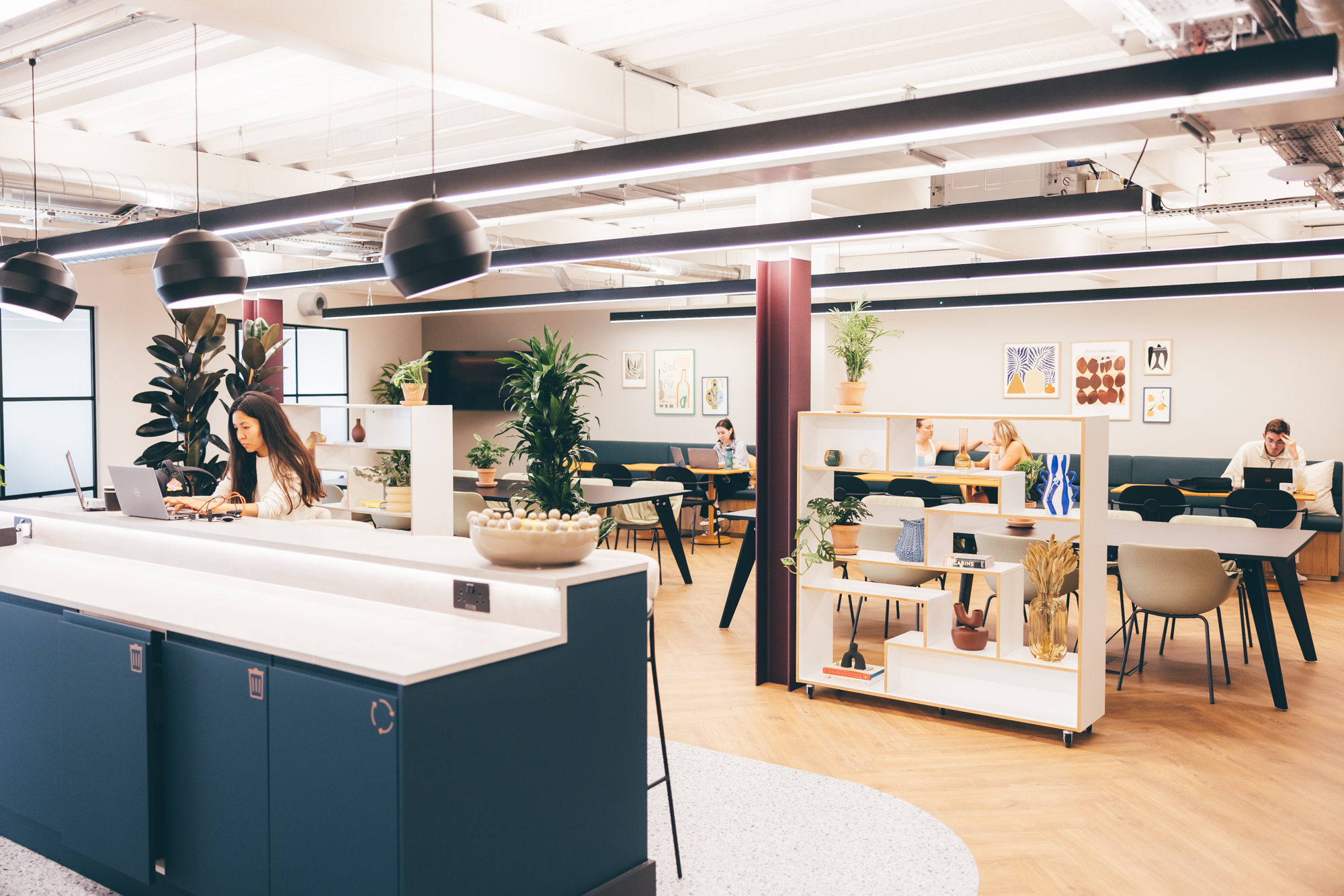
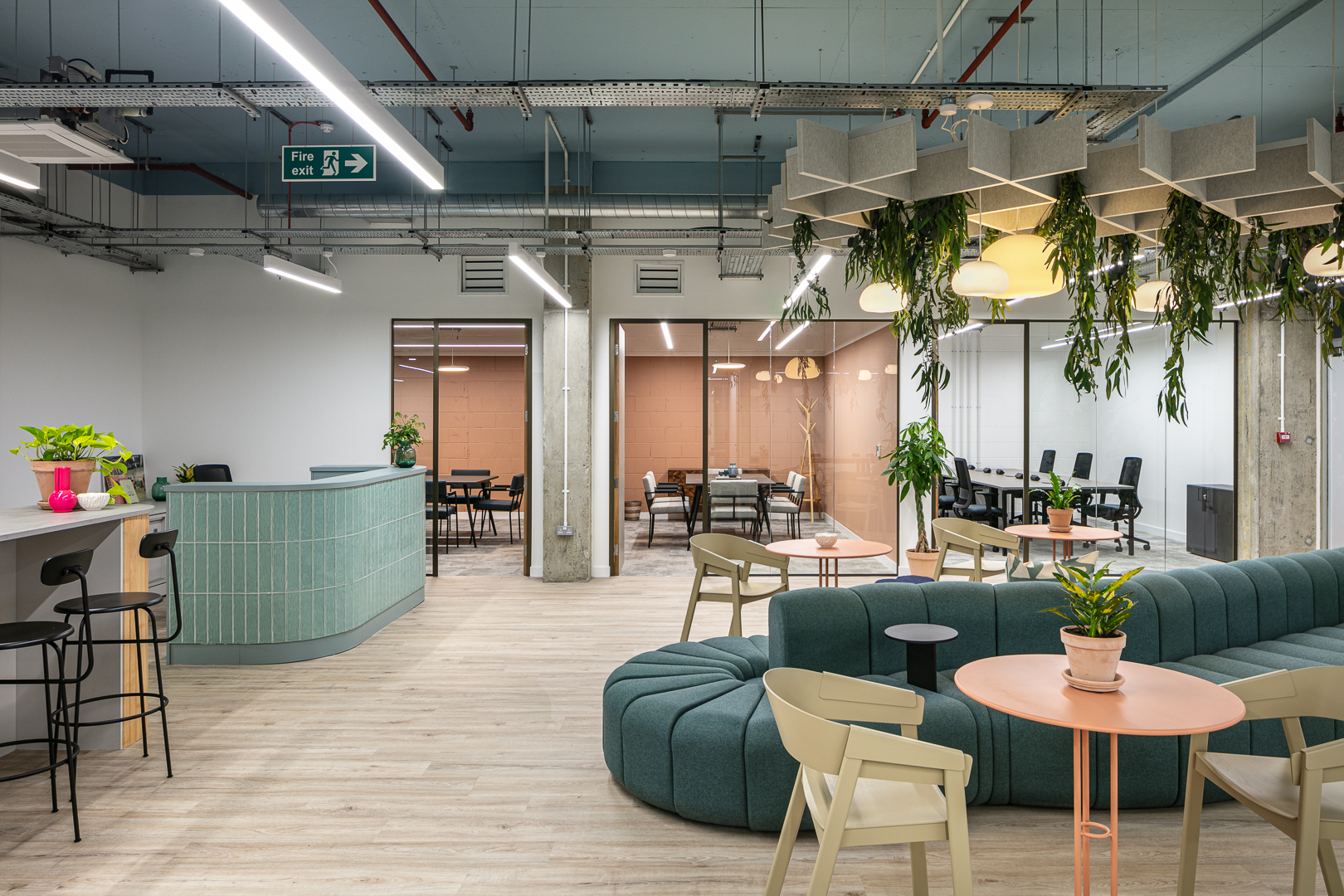
Coworking spaces support these findings by combining quiet zones, breakout areas and meeting rooms into one place. They allow people to move between deep focus and collaboration without friction, supporting productivity and wellbeing at the same time.
Tackling loneliness is also a retention strategy
As we know, employee loneliness affects wellbeing, but it impacts employee retention and loyalty too.
When people feel disconnected, they’re more likely to disengage emotionally from their role and organisation, and that disengagement often precedes attrition.
Close workplace relationships are strongly connected to engagement and performance outcomes, and there is an increasing importance of having a “best friend at work”.
That doesn’t mean companies should try to manufacture friendships. It does mean they should create conditions where connection can happen naturally, especially for remote teams where informal interaction has been stripped away.
Offering coworking access is a simple signal: we’re not just paying attention to output, we’re paying attention to how work feels.
Supporting different working styles more inclusively
Coworking as a benefit also addresses a reality that fully remote models often overlook: not everyone’s home setup is the same.
Some employees live alone. Others share with family or housemates. Some have space and peace. Others don’t. A one-size-fits-all approach assumes a level playing field that rarely exists.
By offering coworking access, companies give employees choice. They can select the environment that supports them best on any given day rather than forcing productivity into spaces that don’t work for them.
And that choice can be a meaningful driver of effectiveness and wellbeing. Research and reporting around hybrid working has consistently highlighted the benefits of flexibility when it’s paired with access to the right environments.
A more sustainable way to think about work
We’re way past the debate and choosing sides between home and office. Really, the future of work is building systems that support people as they actually are.
The rise in employee loneliness is a signal that something needs recalibrating. Not a reversal of progress, but a more human approach to flexibility.
Coworking spaces offer a way to reintroduce connection without sacrificing autonomy. They acknowledge that work is both productive and social, individual and collective.
For companies managing remote teams, the question is no longer whether loneliness exists. The data is clear. The real question is how you choose to respond.
Offering coworking memberships is one response that’s gaining momentum because it works. It supports wellbeing, productivity and retention without forcing uniformity or control.
Not by telling people where to work, but by giving them places where they genuinely want to work.